
Dentures Hammond
Rebuild a Reliable Smile
Millions of individuals throughout the U.S. are edentulous (missing all teeth). If you are among them, you may be all too familiar with the struggles that come with your condition. The good news is that modern dentistry offers a range of tooth replacement options that can rebuild a reliable and confident smile! For example, our Hammond team might recommend that you get dentures. Continue reading below to learn more about this elegant solution for tooth loss, or contact us to request your personal consultation.
Why Choose United Dental Centers of Hammond for Dentures?
- Traditional & Implant Dentures Available
- Beautiful, Natural-Looking Dental Prosthetics
- Highly Skilled & Caring Team
Who Is a Good Candidate for Dentures?

Dentures are a versatile solution that can restore your mouth's appearance and functionality regardless of how many teeth have gone missing. With them in place, you can eat, speak, and smile more like you did prior to tooth loss.
However, that doesn’t mean this is the best solution to meet everyone’s unique needs. Before proceeding, you must consult one of our providers in Hammond to ensure you’re a good candidate. Continue reading to learn more about who might benefit from this popular treatment!
Effects of Missing Teeth
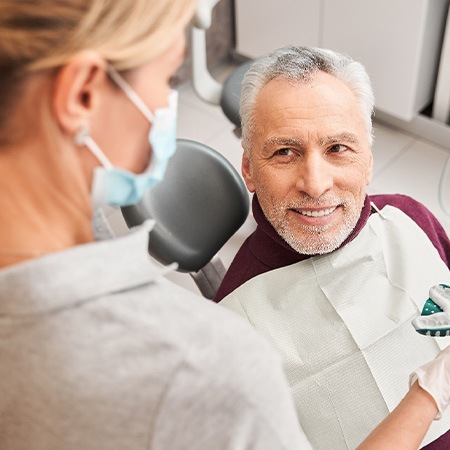
Did you know that periodontitis, or advanced gum disease, is the number one leading cause of tooth loss in adults? If bacteria infect your gums and it goes untreated, the tissues eventually recede away from your enamel to escape the disease. This leaves your teeth without a firm enough anchor, and they can become destabilized or dislodged. However, you might also suffer tooth loss due to severe decay or physical trauma that injures or knocks one out.
Whatever the reason, it’s important to replace your lost teeth as soon as possible to avoid potential consequences. For instance, you might struggle to bite and chew, clearly enunciate words, or experience dental drifting that leads to additional oral issues. Not only that, but you might feel so self-conscious about the changes to your appearance that you avoid spending time with others.
What Qualifies You for Dentures?
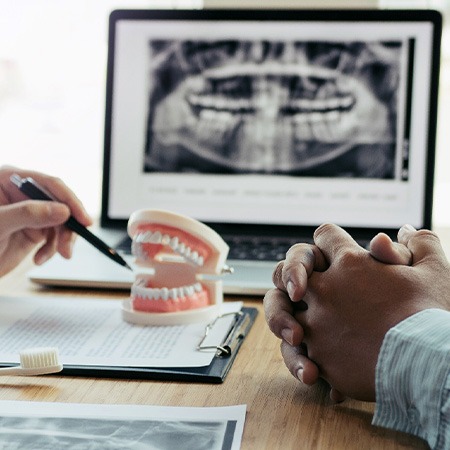
Our team in Hammond can provide a lifelike set of teeth to replace some or all of the natural ones that went missing. But before we can suggest an appropriate type, we must examine your mouth to ensure that your gum tissues are healthy and your jaw is strong enough to support them.
Then, based on our findings and the number of teeth lost, we might recommend a full or partial set or implant dentures to suit your individual circumstances.
Alternative Tooth-Replacement Options
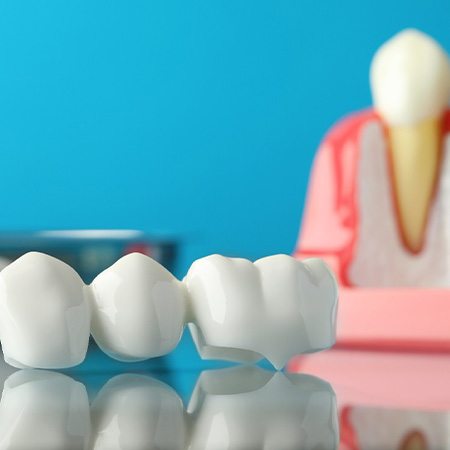
If we determine that you’re not currently a good candidate for dentures, don’t lose hope! You might still benefit from one of the following options:
- Dental bridges. These oral appliances are often used to replace one or several consecutively missing teeth in a row. They contain the necessary number of pontics (artificial teeth) between a dental crown on each end that anchors to abutments on either side of the space in your smile. They’re typically made from resilient ceramic customized to resemble your enamel for seamless results.
- Dental implants. Our team has the expertise and state-of-the-art equipment to surgically position one or more support rods in your jaw to hold artificial teeth for a more reliable, longer-lasting restoration.
Types of Dentures
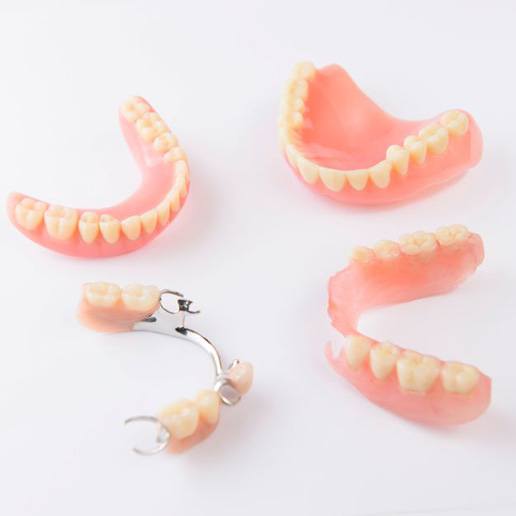
There are a few different types of dentures, each of which comes with a unique set of advantages. During your consultation, we will recommend the specific type of prosthetic that lines up with your oral health, personal preferences, and budget. For example, we might determine that a partial denture, full denture, or implant denture is right for you.
Partial Dentures
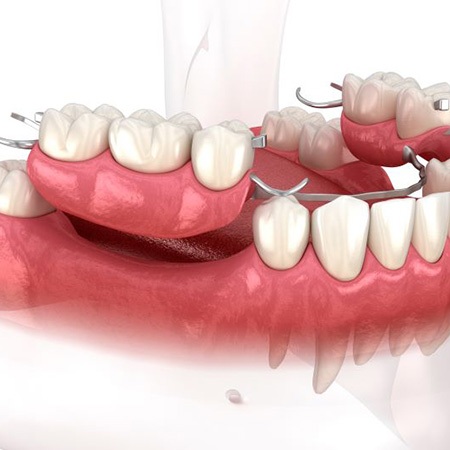
Just like its name indicates, a partial denture does not replace all teeth throughout a dental arch. Rather, it fits in like a puzzle piece, filling empty spaces around the remaining natural teeth. Small acrylic or metal clasps help to keep a partial denture in place throughout eating and speaking.
Full Dentures
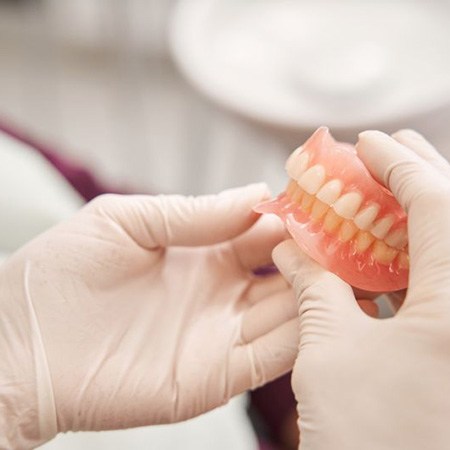
A full denture is a highly customized prosthetic that replaces either all of the upper or lower teeth. Full dentures usually have an acrylic base along with porcelain or acrylic teeth. Natural suction or adhesive helps to keep them in place for all-day wear.
Implant Dentures
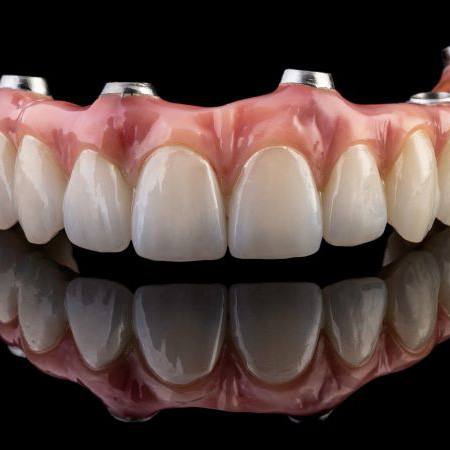
Instead of relying on clasps, suction, or adhesive to stay in place, an implant denture is anchored in the jawbone with the help of small prosthetic tooth roots (dental implants). This makes them even stronger and more reliable than their traditional counterparts. Implant dentures may be removable, or they may be permanently fixed in the mouth.
The Benefits of Dentures

Dentures offer a number of noteworthy benefits, including the following:
- Improved Appearance: Dentures help to restore the natural look of your smile, which can enhance your confidence in social and professional situations.
- Better Speech: Dentures can make it easier for you to clearly enunciate your words.
- Enhanced Chewing Ability: You may get to enjoy a wider variety of foods, leading to better nutrition and overall health.
- Support for Facial Structure: Dentures can maintain the shape of your face, reducing sagging that may occur with tooth loss. Implant dentures can even support the underlying bone structure.
- Easy Maintenance: In many ways, caring for dentures is simple and straightforward. They can last for several years if you adhere to some basic best practices that our team will explain to you.
